
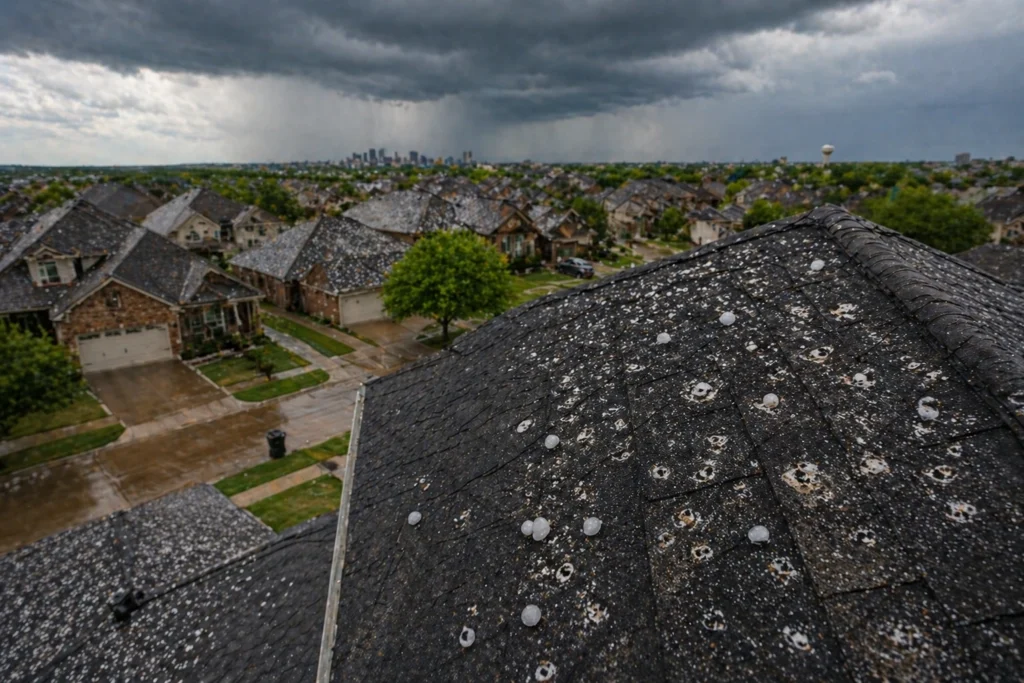
Hailstorms don’t knock. They arrive fast, hit hard, and leave behind damage that isn’t always obvious but always expensive. If you’re dealing with a roof hail damage insurance claim Texas, you already know how quickly things can spiral. One minute everything looks fine. The next, you’re dealing with inspections, estimates, and a process that feels stacked against you. I’ve seen it firsthand. Homeowners miss damage. Adjusters miss scope. Claims get underpaid. And by the time the problem shows up inside the home, it’s too late.
This guide fixes that. We’re going deep. Not surface-level tips real, actionable insight. You’ll learn how to identify hail damage by roof type, what to do immediately after a storm, how to build a bulletproof claim, and why the supplement process is where most homeowners either win… or lose. If you’re serious about protecting your property and maximizing your claim, you’re in the right place. And if you’re working with Garland Public, you’re already positioned to do this the right way.
Understanding Hail Damage and Why It Matters
Hail damage is deceptive. That’s the problem. It rarely looks catastrophic at first. No giant holes. No obvious collapse. But beneath the surface, the integrity of your roof may already be compromised.
Here’s what hail actually does:
- Weakens protective layers
- Breaks down material structure
- Shortens roof lifespan
- Creates entry points for water
And the most important part? Insurance companies don’t pay for potential problems. They pay for proven damage. That’s why understanding the difference between cosmetic and functional damage is critical in any hail roof damage insurance situation.
Cosmetic damage: Appearance only. Often denied.
Functional damage: Impacts performance. Typically covered.
Your job is to prove functional damage. Everything in this guide builds toward that. Interestingly, systems like insurance evaluations can sometimes resemble complex analytical frameworks similar to concepts found in Eigenvalue, where small changes in input variables can significantly alter outcomes.
How to Identify Hail Damage by Roof Type (Expert Guide)
Not all roofs react the same way to hail. Understanding your roof type gives you a major advantage when building a hail damage on roof insurance claim.
Asphalt Shingle Roofs
This is the most common roofing material and the most frequently misunderstood during inspections.
Look for:
- Granule loss exposing the asphalt layer
- Soft bruising when pressed
- Dark circular impact marks
- Fractures along shingle edges
Granules protect against UV damage. Once they’re gone, deterioration accelerates quickly. Action step: Run your hand lightly across shingles. Uneven softness is a red flag.
Metal Roofs
Metal roofs are durable, but not immune.
Signs of damage:
- Dents and dimpling
- Scratched or compromised coatings
- Loose seams or fasteners
If coatings are damaged, oxidation becomes a real concern over time.
Action step: Inspect seams and joints closely this is where leaks begin.
Tile Roofs (Clay or Concrete)
Tile doesn’t bend. It breaks.
Check for:
- Hairline cracks
- Chipped edges
- Displaced tiles
Even minor cracks can lead to water intrusion beneath the surface.
Action step: Focus on roof valleys and edges where impact is strongest.
Flat & Commercial Roof Systems
Flat roofs hide damage better than any other system.
Look for:
- Membrane punctures
- Blistering or bubbling
- Pooling water
- Soft spots indicating moisture saturation
Action step: Consider professional moisture scans for accurate assessment.
Immediate Steps to Take After a Hailstorm
What you do next matters more than most people realize.
- Stay off the roof if conditions are unsafe
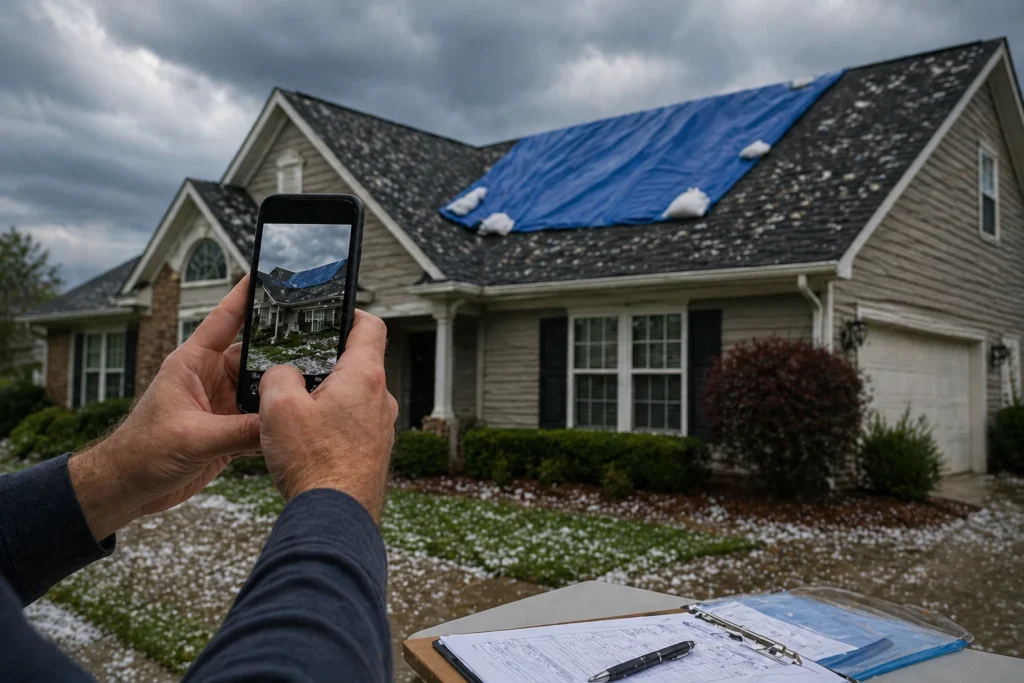
- Take photos from the ground
- Prevent additional damage with tarps if needed
- Schedule a professional inspection
- Begin organizing your documentation
At this stage, many homeowners are unknowingly starting How to Document Hail Damage for an Insurance Claim, and doing it correctly early can significantly strengthen your case.
How to Document Damage for Your Insurance Claim
Documentation is the backbone of any successful claim.
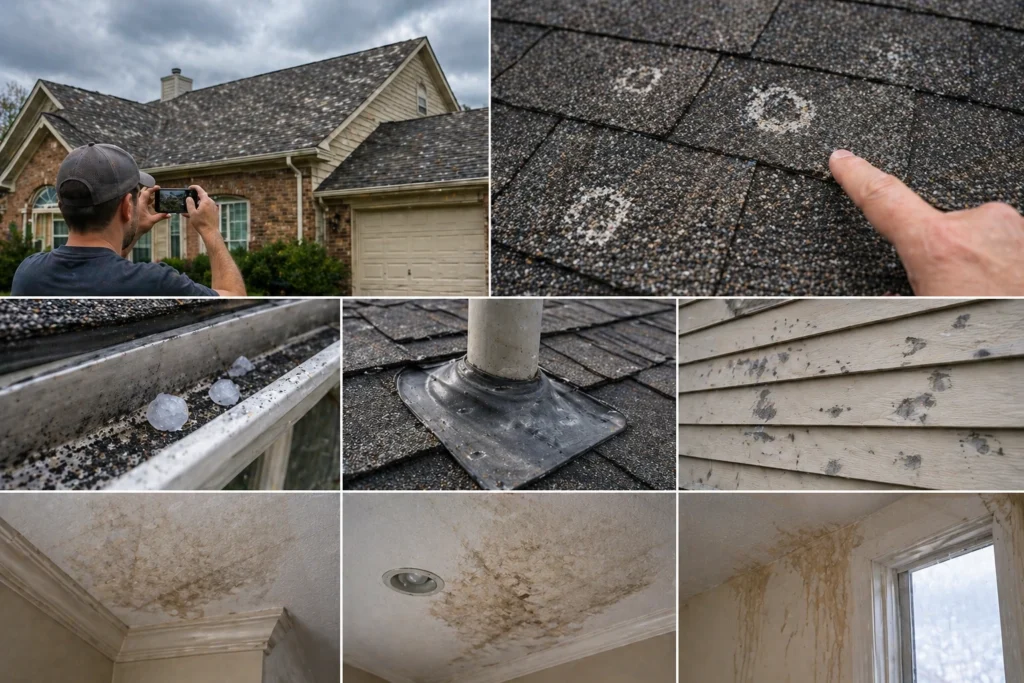
Capture Visual Evidence
- Wide-angle shots of the entire roof
- Close-ups of impact points
- Photos of gutters, vents, and siding
- Interior signs of leaks or staining
Build a Damage Inventory
List everything affected:
- Roofing materials
- Flashing
- Underlayment
- Ventilation components
- Drainage systems
Track Timing
- Record storm date
- Save weather reports
- Keep receipts for temporary repairs
Use Advanced Tools
- Drone inspections
- Thermal imaging
- Moisture detection devices
Stay Organized
Create folders, label files clearly, and maintain a timeline of events.
Filing a Roof Hail Damage Insurance Claim Texas (Step-by-Step)
Here’s how the process typically works:
- Contact your insurance provider
- Open a claim
- Schedule an inspection
- Meet the adjuster when possible
- Review the estimate carefully
Expect delays. Expect questions. Stay proactive.
What Insurance Carriers Commonly Miss in Their Scope
Initial estimates often miss key components.
Common gaps include:
- Flashing replacements
- Underlayment damage
- Ridge caps
- Ventilation systems
- Gutters and downspouts
This is exactly why Hail Damage Claim Supplements: What Carriers Miss in Their Scope plays such a critical role in ensuring your claim reflects the true extent of the damage.
The Supplement Process Explained (Where Claims Are Won or Lost)
Supplements correct underpaid claims.
What Is a Supplement?
A revised claim including:
- Missing items
- Updated pricing
- Newly discovered damage
When to Request One
- Low initial estimate
- Additional damage found during repairs
- Incorrect material pricing
Real Impact
A claim can double in value after proper supplementation. Details matter.
Common Reasons Hail Claims Are Denied
Denials happen but often for avoidable reasons:
- Weak documentation
- Filing too late
- Damage labeled cosmetic
- Policy exclusions
If your claim gets denied, understanding What to Do If Your Hail Claim Was Denied in Texas can help you take the right next steps and potentially recover what you’re owed.
Public Adjuster vs. Insurance Adjuster Why It Matters
There’s a critical difference in representation. When evaluating Public Adjuster vs. Insurance Adjuster for Hail Claims in Texas, the distinction becomes clear: one works for the insurance company, the other works for you.
| Role | Works For | Goal |
| Insurance Adjuster | Insurance Company | Minimize payout |
| Public Adjuster | Policyholder | Maximize payout |
Why a Public Adjuster Changes the Outcome
A public adjuster brings structure to chaos.
They:
- Conduct detailed inspections
- Build comprehensive documentation
- Identify hidden damage
- Negotiate effectively
Working with Garland Public ensures your claim is handled with precision and strategy not guesswork.
Preventing Future Roof Damage After a Claim
Once your roof is restored, protect it.
- Upgrade to impact-resistant materials
- Schedule annual inspections
- Maintain gutters and drainage
- Address small issues immediately
Prevention reduces long-term risk.
Local Insight: Hail Claims in Texas
Texas sees frequent hailstorms. That creates a competitive claims environment.
- Faster inspections
- Stricter evaluations
- Higher documentation standards
In Garland, homeowners who prepare properly and work with experts like Garland Public consistently see better outcomes.
Final Thoughts
A hailstorm is unpredictable. Your response shouldn’t be.
The difference between a weak and strong roof hail damage insurance claim Texas comes down to:
- Documentation quality
- Inspection accuracy
- Negotiation strategy
Get those right and you don’t just file a claim. You control the outcome.
FAQs
Damage that affects your roof’s function, like bruising or cracks, is typically covered.
File as soon as possible delays can weaken your claim and risk denial.
Yes, even small hail can weaken materials and lead to long-term issues.
Not always coverage depends on policy terms and whether damage is deemed functional.
Document damage, gather evidence, and consider having a professional inspection done.
It can take weeks to months depending on claim complexity and negotiations.
Yes, with additional documentation or professional assistance, claims can be challenged.
A supplement is a request for additional funds when damage was missed or underpriced.
Only temporary repairs major repairs should wait until after inspection.
For larger or disputed claims, they often help maximize payouts and reduce stress.