

Hailstorms don’t send warnings. They arrive fast, hit hard, and leave behind damage that isn’t always visible from the ground. Then comes the real challenge your insurance claim. And this is where everything can go right… or very wrong. Understanding Public Adjuster vs. Insurance Adjuster for Hail Claims in Texas is one of the most important steps you can take as a homeowner. This isn’t just a technical distinction. It’s the difference between accepting what you’re offered and fighting for what you’re actually owed.
I’ve seen it play out both ways. Homeowners accept the first estimate and move on. Others push deeper, question the numbers, and end up with significantly higher payouts. The deciding factor? Representation. Let’s break it down properly.
Understanding the Basics of Hail Damage Claims in Texas
Texas leads the country in hail-related insurance claims. The storms are frequent, aggressive, and unpredictable.
After a hailstorm, most homeowners follow a similar path:
- They notice damage or suspect it
- They contact their insurance company
- An adjuster is assigned
- The property is inspected
- A settlement offer is issued
It sounds simple. It rarely is.
Hail damage isn’t always obvious. Shingles may look intact but have lost granules. Metal components may have dents that compromise performance. Underlayment damage may go completely unseen. In high-activity areas like Garland, where storms can impact entire neighborhoods at once, the volume of claims increases dramatically. That means faster inspections. Less time per property. More room for missed details. And every missed detail has a dollar value attached to it.
What Is an Insurance Adjuster?
Role and Responsibilities
An insurance adjuster is assigned by your insurance company to evaluate your claim. Their responsibilities include:
- Inspecting the property
- Identifying visible damage
- Estimating repair costs
- Submitting a report to the insurer
They are trained professionals. But they represent the insurance company not you.
Types of Insurance Adjusters
There are two common types:
- Staff Adjusters – Employees of the insurance company
- Independent Adjusters – Contractors hired during high-volume periods
After large hailstorms, independent adjusters often handle dozens of inspections per week. Sometimes per day.
Real-World Limitations
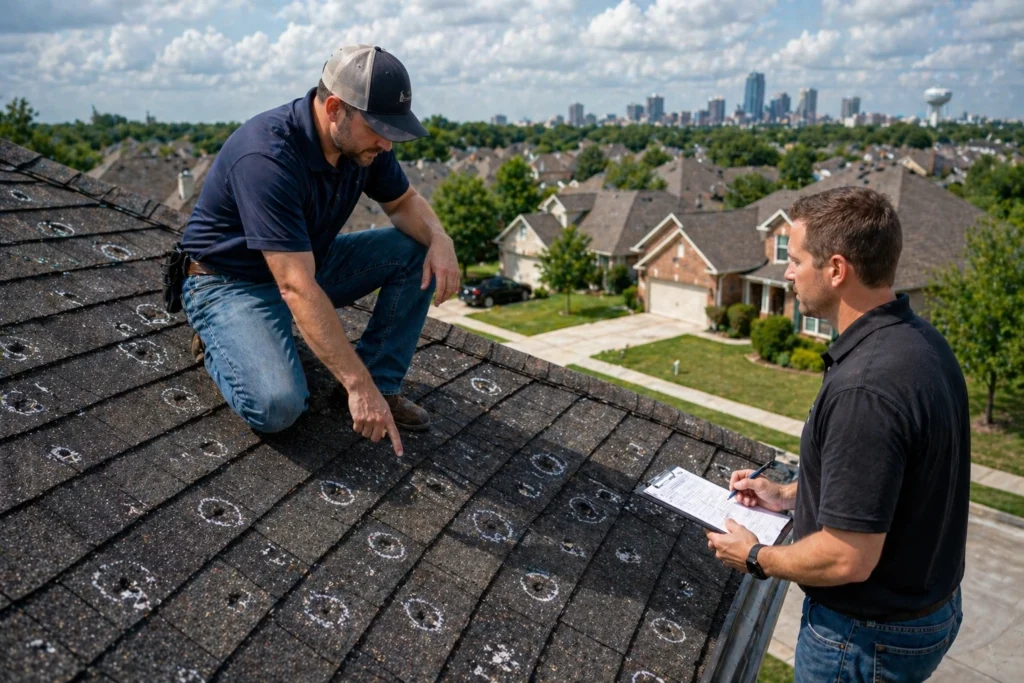
Let’s talk about reality.
Insurance adjusters operate within constraints:
- Strict timelines
- High claim volume
- Company-approved pricing models
- Pressure to close claims quickly
This doesn’t automatically mean bad intentions. But it does mean:
- Inspections may be rushed
- Damage may be underreported
- Estimates may be conservative
That’s where the gap begins.
What Is a Public Adjuster?
Role and Responsibilities
A public adjuster works exclusively for the policyholder. That means you.
Their responsibilities include:
- Conducting a detailed, independent inspection
- Documenting all damage thoroughly
- Preparing a comprehensive estimate
- Negotiating with the insurance company
They don’t answer to the insurer. They answer to you.
Compensation Structure
Public adjusters typically work on a contingency basis:
- No upfront payment
- Paid a percentage of the final settlement
This aligns their goals with yours. The better your outcome, the better theirs.
Why Homeowners Choose Public Adjusters
Because they want:
- A second opinion
- A more accurate estimate
- Stronger documentation
- Professional negotiation
In complex hail claims, that support can change everything.
Public Adjuster vs. Insurance Adjuster: Side-by-Side Comparison
Here’s a clear breakdown of Public Adjuster vs. Insurance Adjuster for Hail Claims in Texas:
| Feature | Insurance Adjuster | Public Adjuster |
| Representation | Insurance company | Homeowner |
| Objective | Control costs | Maximize claim |
| Payment | Salary/contract | Contingency-based |
| Inspection detail | Limited | Extensive |
| Negotiation | Minimal | Active |
It’s not about who is “better.” It’s about who is working for you.
How Each Adjuster Handles Hail Damage Claims
Inspection Depth
Insurance adjusters often focus on visible damage:
- Obvious shingle damage
- Large dents
- Easily accessible areas
Public adjusters go deeper:
- Granule loss on shingles
- Soft metal impacts
- Flashing and vent damage
- Hidden moisture issues
They don’t stop at what’s easy to see.
Estimating Repairs
Most estimates are created using Xactimate. But the difference lies in how it’s used.
Insurance adjusters may include:
- Basic replacement costs
- Minimal labor assumptions
Public adjusters include:
- Full tear-off and disposal
- Code upgrades
- Detailed labor costs
- Additional components often overlooked
Same software. Different results.
Documentation Standards
Documentation is everything in a claim.
Public adjusters typically provide:
- Dozens (or hundreds) of photos
- Marked damage areas
- Measurement reports
- Supporting narratives
Insurance adjusters may not go to that level of detail, especially under time pressure.
What Insurance Companies Commonly Miss in Hail Claims
This is where claims fall short.
Commonly missed items include:
- Soft metals – Gutters, vents, flashing
- Underlayment damage – Hidden but critical
- Decking issues – Structural concerns beneath shingles
- Ventilation systems – Often ignored
- Interior damage – Leaks, stains, insulation impact
In Garland, repeated storm exposure makes these issues more common and more costly. A missed vent or flashing issue might seem small. It’s not. It compounds over time.
The Supplement Process: Where Public Adjusters Excel
A supplement is an addition to your original claim. It corrects missed or undervalued items. One critical area homeowners often overlook is Hail Damage Claim Supplements, which can dramatically change the outcome of a claim when handled correctly.
Here’s how it works:
- Additional damage is identified
- A revised estimate is created
- Documentation is submitted
- The insurance company reviews and updates the claim
Public adjusters are specialists in this process.
They know:
- What’s missing
- How to prove it
- How to justify it
And they don’t stop at one supplement. They push until the scope reflects reality.
Advanced Claim Strategy: What Most Homeowners Overlook
This is where things get interesting. Experienced public adjusters don’t just inspec they strategize.
They consider:
- Policy language and coverage limits
- Depreciation recovery opportunities
- Matching requirements under Texas law
- Local building codes
For example:
- If only part of a roof is damaged, can the entire roof be replaced?
- If materials are discontinued, does matching require full replacement?
These aren’t surface-level questions. They directly impact payout.
In many ways, analyzing a claim requires structured reasoning similar to complex frameworks studied in fields like Epistemology, where evidence, justification, and interpretation all shape final conclusions.
When Should You Hire a Public Adjuster?
Consider hiring one if:
- Your estimate feels too low
- Damage is widespread
- You’re unsure what’s covered
- Your claim was denied or partially approved
- The process feels overwhelming
If your gut says something is off, don’t ignore it.
When You Might Not Need One
Not every claim requires a public adjuster.
You may not need one if:
- Damage is minor
- The insurance estimate is thorough
- The payout matches repair costs
Still, a second opinion never hurts.
Common Mistakes Homeowners Make After a Hailstorm
Avoid these:
- Waiting too long to file a claim
- Failing to document damage
- Accepting the first offer
- Hiring the wrong contractor
- Ignoring small signs of damage
Each mistake reduces your leverage.
Real Scenario: A Side-by-Side Outcome
Let’s walk through a realistic example.
Scenario Without a Public Adjuster
- Initial estimate: $9,200
- Limited scope
- No supplements
- Final payout: $9,200
Scenario With a Public Adjuster
- Re-inspection identifies additional damage
- Revised estimate: $15,800
- Supplements add: $7,000
- Final payout: $22,800
That’s not a small difference. That’s a full recovery versus a partial one. This is exactly why Public Adjuster vs. Insurance Adjuster for Hail Claims in Texas matters so much.
Tips to Maximize Your Hail Claim Outcome
Take control of your claim with these steps:
- Document damage immediately after the storm
- Take wide, mid, and close-up photos
- Request a detailed estimate
- Review your insurance policy carefully
- Don’t rush to accept the first offer
- Get a second opinion
Simple actions. Significant results.
Questions to Ask Before Hiring a Public Adjuster

Protect yourself by asking:
- Are you licensed in Texas?
- How many hail claims have you handled?
- What is your fee percentage?
- How do you handle supplements?
- What’s your process from start to finish?
Transparency matters.
Why Local Expertise Matters in Texas
Texas hail claims are unique.
- Weather patterns vary by region
- Roofing materials differ
- Local codes impact repairs
In Garland, experienced professionals understand:
- Common storm damage patterns
- Insurance response trends
- Local construction standards
That local knowledge can influence your claim outcome more than you think.
Final Verdict: Public Adjuster vs. Insurance Adjuster
Let’s keep it simple.
Insurance adjusters:
- Start the process
- Provide initial estimates
Public adjusters:
- Strengthen your position
- Expand your claim
- Negotiate your payout
If your claim is straightforward, you may not need additional help. But if it’s complex, undervalued, or disputed the choice becomes clear.
Conclusion: Take Control of Your Claim
Hail damage isn’t just about fixing a roof. It’s about protecting your investment. Understanding Public Adjuster vs. Insurance Adjuster for Hail Claims in Texas gives you a serious advantage. It helps you ask better questions. It helps you spot gaps. And it helps you avoid leaving money on the table.
In Garland, where hailstorms can create widespread damage in minutes, homeowners who take a proactive, informed approach consistently achieve better outcomes. Don’t rush the process. Don’t accept less than what your policy allows. And most importantly don’t go in blind.
FAQs
A public adjuster works for you, while an insurance adjuster works for the insurance company.
You should consider one if your claim is undervalued, denied, or involves extensive damage.
In many cases, yes they identify missed damage and negotiate higher settlements.
They typically charge a percentage of the final settlement and require no upfront payment.
Yes, you can hire one at almost any stage of the claims process.
They may overlook soft metals, underlayment, or hidden structural damage.
It usually takes a few weeks to several months depending on complexity and negotiations.
Not always, unless there are disputes or missing damage in the estimate.
Clear photos, inspection reports, estimates, and your insurance policy details are essential.
Yes, with proper documentation or a public adjuster’s help, many denied claims can be challenged.